

Are you evaluating CRM platforms for your business? This Salesforce 2026 Review provides everything you need to know about pricing, features, and AI advancements to make an informed decision.
This comprehensive guide breaks down the latest Salesforce updates, core functionalities, and pricing structures. We explore how its advanced analytics, artificial intelligence, and extensive integration capabilities can streamline your sales process and drive unprecedented revenue growth.
Understanding the Landscape in Our Salesforce 2026 Review
Salesforce continues to dominate the customer relationship management market. When we conduct a Salesforce 2026 Review, we look at how the platform has evolved from a basic contact management system into an expansive ecosystem powered by artificial intelligence and data analytics. Organizations of all sizes use this software to manage sales pipelines, execute marketing campaigns, and deliver exceptional customer service.
If you are planning your CRM migration strategy, understanding the full scope of Salesforce capabilities is critical. The platform offers unparalleled customization, allowing you to tailor every field, object, and workflow to match your unique business processes. However, this massive flexibility comes with a steep learning curve and premium pricing. Our Salesforce 2026 Review breaks down whether these costs translate to genuine return on investment.
Key Features Driving Sales Performance
Every thorough Salesforce 2026 Review must examine the core features that separate this platform from its competitors. Salesforce Sales Cloud remains the flagship product, offering a suite of tools designed to accelerate deal closures and improve team visibility.
Advanced Lead and Opportunity Management
Salesforce excels at tracking prospects throughout the entire buyer journey. You can easily capture leads, assign them to the appropriate sales representatives based on routing rules, and monitor their progress. The platform prevents duplicate entries and ensures your data remains clean. With customizable sales pipelines, you can define specific stages that mirror your actual sales cycle.
When your team utilizes lead scoring techniques, they can prioritize high-value prospects. The system allows you to build complex rules that rank leads based on their engagement, company size, and demographic data. This ensures your sales representatives spend their time talking to prospects who are actually ready to buy.
Einstein Copilot and Agentforce AI
No Salesforce 2026 Review is complete without discussing artificial intelligence. Salesforce has deeply integrated Einstein Copilot into its ecosystem. This generative AI assistant transforms how sales teams operate. It can summarize long email threads, draft personalized responses, and generate meeting briefs automatically.
The introduction of Agentforce 360 takes this further. It connects structured CRM data with unstructured data like PDFs and emails to give AI agents a complete picture of your business. These AI agents can update records, predict deal outcomes, and recommend the next best action for your sales team. This drastically reduces administrative overhead and keeps your team focused on revenue-generating activities.
Custom Dashboards and Robust Reporting
Data means nothing if you cannot understand it. Salesforce provides incredibly powerful reporting tools that allow you to visualize your business performance. You can build custom dashboards using a drag-and-drop interface, selecting from various chart types like funnels, bar graphs, and the newly updated doughnut charts.
These real-time dashboards give managers instant visibility into pipeline health, revenue forecasts, and individual representative performance. While creating your first joined report might feel overwhelming, the depth of insight you gain makes the effort worthwhile. You can track essentially any metric you capture in the system.
Exploring the AppExchange Ecosystem
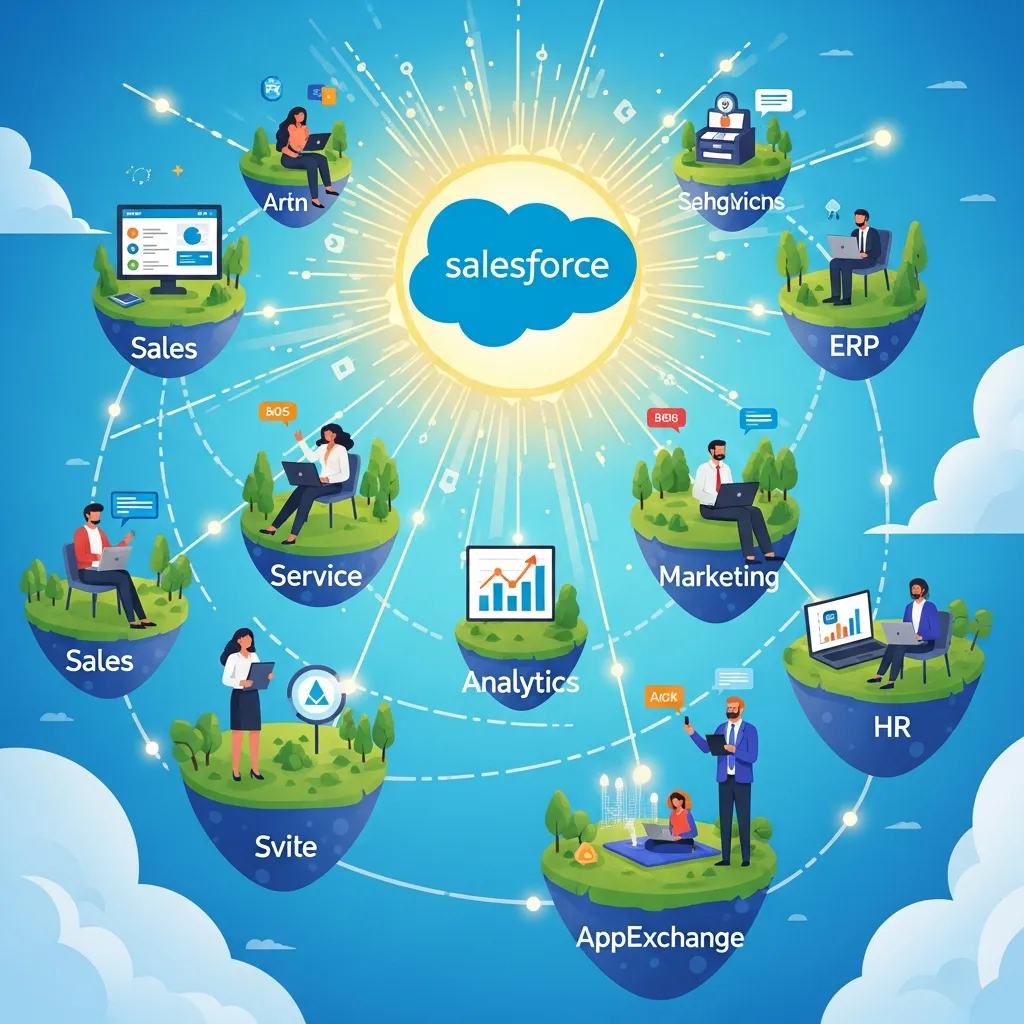
One of the biggest advantages highlighted in this Salesforce 2026 Review is the AppExchange. This massive marketplace houses thousands of third-party integrations and native applications. Whether you need to connect your accounting software, telephony system, or marketing automation workflows, you will find an app to handle it.
This ecosystem prevents data silos. Instead of forcing your team to switch between five different applications to do their job, you can bring all that data directly into Salesforce. This unified experience improves productivity and ensures your customer data remains accurate across all departments.
Analyzing Salesforce Pricing Tiers

Cost is a major factor in any software decision. Our Salesforce 2026 Review analyzes the current pricing structure to help you budget effectively. Salesforce operates on a per-user, per-month billing model, and they generally require annual contracts.
Starter and Pro Suites
The Starter Suite offers a highly accessible entry point. It provides basic contact management, lead tracking, and email integration. This tier works well for small teams that need a structured database but do not require complex automations.
The Pro Suite unlocks more customization and workflow automations. You gain access to better reporting capabilities and the ability to build more tailored processes. Many mid-sized businesses find this tier offers the best balance of features and affordability.
Enterprise and Unlimited Plans
The Enterprise tier represents the most popular choice for established organizations. It includes advanced pipeline management, comprehensive forecasting features, and the ability to utilize complex integrations through the API. If you need to deeply customize your instance, this is usually the starting point.
The Unlimited and Agentforce 1 Sales tiers cater to large enterprises that want access to every feature, including premier support and maximum AI capabilities. These premium tiers represent a significant financial investment but provide the ultimate toolset for massive sales organizations.
Comparison Table: Salesforce vs Competitors
To provide a balanced Salesforce 2026 Review, we must see how it stacks up against other market leaders. Here is a quick comparison of top CRM platforms.
|
Feature/Metric |
Salesforce |
HubSpot |
Zoho CRM |
Monday CRM |
|---|---|---|---|---|
|
Target Audience |
Mid-size to Enterprise |
Scaling Businesses |
Small to Mid-size |
Visual/Project Teams |
|
Customization |
Excellent |
High |
Good |
Moderate |
|
App Integrations |
5000+ |
1000+ |
1000+ |
200+ |
|
AI Capabilities |
Einstein/Agentforce |
Breeze AI |
Zia AI |
Basic AI |
|
Learning Curve |
Steep |
Moderate |
Low |
Very Low |
|
Built-in Marketing |
Requires Add-on |
Excellent |
Good |
Limited |
Common Mistakes to Avoid During Implementation
Many companies struggle because they do not prepare properly for their CRM rollout. This Salesforce 2026 Review highlights the most frequent pitfalls so you can avoid them.
First, do not migrate bad data. If your current spreadsheets are full of duplicates and outdated contacts, clean them before you import them. Moving messy data into a new system ruins user trust immediately.
Second, avoid over-customizing right away. Because Salesforce lets you change everything, many companies build incredibly complicated workflows before they even understand how the base system works. Start with the standard objects and only add custom fields when you absolutely need them.
Finally, do not neglect user training. A CRM only works if your team uses it. You must invest time in training your staff and explaining how the system benefits them personally. If you skip training, your expensive software will turn into a glorified address book.
Pro Tips for Maximizing Your CRM Investment
To get the most out of your platform after reading this Salesforce 2026 Review, you need to leverage its advanced capabilities strategically.
Utilize the Trailhead learning platform. Salesforce provides a massive library of free, interactive training modules. Encourage your team to complete trails relevant to their roles. This empowers them to discover new ways to save time and close deals faster.
Set up automated customer retention campaigns. You can use Salesforce Flow to trigger emails and task assignments when a customer’s contract approaches renewal or if they stop engaging with your product. Proactive outreach prevents churn and increases lifetime value.
Regularly audit your user permissions. As your company grows, people change roles. Make sure users only have access to the data they need to do their jobs. This keeps your system secure and prevents accidental data deletion.
Is Salesforce the Right Choice for You?
Concluding this Salesforce 2026 Review requires an honest assessment of your business needs. If you run a highly data-driven organization with complex sales cycles, Salesforce offers the power and scalability you need. Its reporting tools and AI integrations give you a distinct competitive advantage.
However, if you operate a very small business with straightforward processes, the cost and complexity might outweigh the benefits. You must weigh the premium pricing against the efficiency gains your team will experience. For companies planning long-term growth and requiring an enterprise-grade infrastructure, Salesforce remains the undisputed industry leader.
Final Thoughts on the Salesforce Ecosystem
This Salesforce 2026 Review demonstrates that the platform continues to innovate and push the boundaries of what CRM software can achieve. By focusing on artificial intelligence and deep data integration, Salesforce helps modern sales teams work smarter, not harder.
If you are ready to transform your sales operations, take the time to evaluate your internal processes. Map out exactly what you need a CRM to do, compare those requirements against the features detailed in this Salesforce 2026 Review, and plan a strategic rollout. When implemented correctly, this platform acts as the ultimate catalyst for business growth.
FAQs
What is the main focus of a Salesforce 2026 Review?
A comprehensive Salesforce 2026 Review focuses on the platform’s latest updates, including Agentforce AI, updated pricing structures, new dashboard visualizations, and overall user experience improvements for sales teams.
Does Salesforce offer a free plan for small businesses?
Salesforce offers a 30-day free trial for most of its products, but it does not offer a forever-free plan like some of its competitors. You will need to purchase a subscription once the trial period ends.
How difficult is it to learn how to use Salesforce?
Salesforce has a steeper learning curve than simpler CRM tools due to its extensive customization options. However, they provide excellent training resources through Trailhead to help users master the platform.
What makes Einstein AI different from other AI tools?
Einstein AI is deeply integrated into the Salesforce data architecture. It does not just generate text; it analyzes your specific historical deal data to predict outcomes, score leads accurately, and recommend actionable next steps.
Can I integrate my current email provider with Salesforce?
Yes, Salesforce offers seamless native integrations with major email providers like Gmail and Microsoft Outlook. This allows you to sync calendars, log emails automatically, and manage contacts directly from your inbox.
Why do some companies fail with their Salesforce implementation?
Implementation usually fails due to a lack of clear strategy, migrating dirty data, over-complicating the initial setup, and failing to provide adequate training to the end-users.
Is Salesforce Sales Cloud suitable for B2B companies?
Absolutely. Salesforce Sales Cloud is built heavily for B2B environments. It handles complex account hierarchies, long sales cycles, and intricate contract management perfectly.
How much does it cost to add third-party apps from the AppExchange?
Pricing varies wildly on the AppExchange. Some applications are completely free, while others charge a one-time fee or require their own monthly subscription based on the number of users.
Can I run my marketing campaigns directly out of Sales Cloud?
While Sales Cloud has basic mass email features, true marketing automation requires purchasing Salesforce Marketing Cloud or integrating a third-party tool like HubSpot or Mailchimp.
How does Salesforce keep customer data secure?
Salesforce employs enterprise-grade security measures. This includes multi-factor authentication, advanced data encryption, granular user permission settings, and strict compliance with global privacy regulations.